Acrylic vs. PVC: A Material Selection Guide for Custom Products
2026-04-09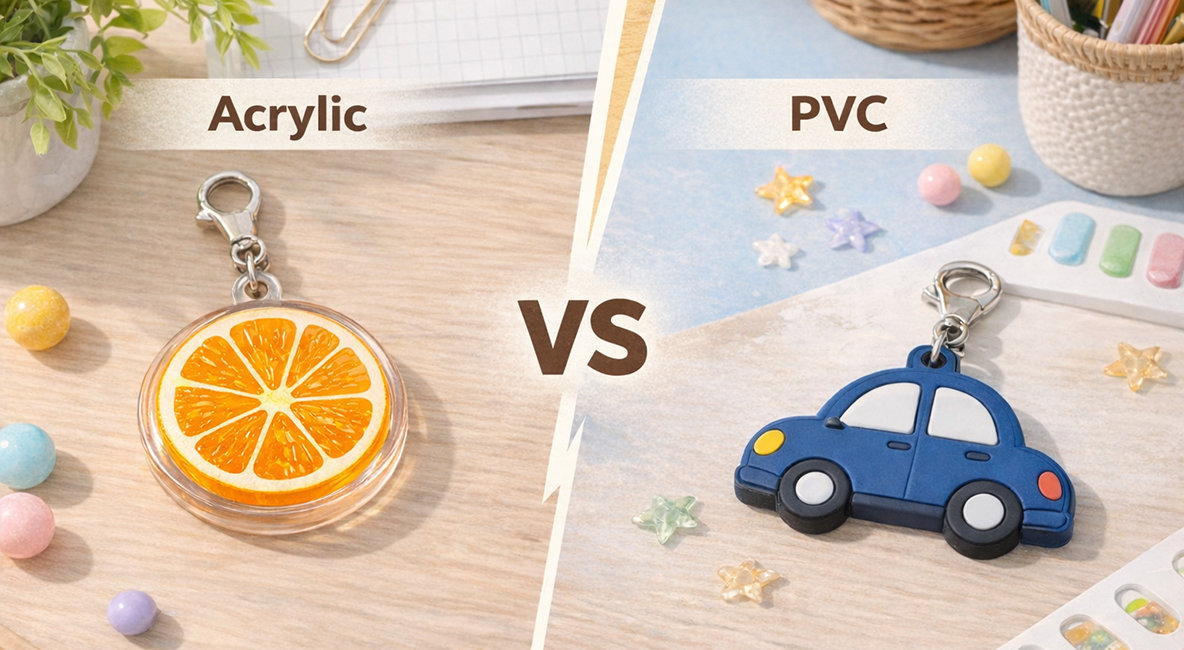
🌟Acrylic vs. PVC: How to Choose the Right Material forCustom Merchandise
Incustom merchandise development, material selection directly affects theproduct’s appearance, cost, and practical use. Among the most common options, acrylic and PVC are widely used for promotional gifts, branded merchandise,display items, and creative products.
Thisarticle outlines the key characteristics, common applications, and selectionconsiderations of acrylic and PVC to help you evaluate which material best fitsyour product needs.
🌟Features and Applications of Acrylic
Acrylicis known for its high transparency and glossy finish, making it suitable forproducts that require a clean, refined, and visually appealing presentation.
Key Features of Acrylic
- High transparency: Suitable for clear graphics and vivid color presentation
- Premium appearance: Offers a polished look for branding and display use
- Flexible processing options: Can be cut, engraved, and printed in various forms
- Good weather resistance: Suitable for both indoor and outdoor applications
Common Acrylic Products
- Acrylic keychains and charms
- Display stands and tabletop decorations
- Awards and plaques
- Creative merchandise and branded items
Ifyour product focuses on visual quality, branding, or collectible value,acrylic is often a suitable choice.
🌟Features and Applications of PVC
PVC isa commonly used plastic material with good processing flexibility and costefficiency, making it suitable for mass production and a wide range ofpractical product applications.
Key Features of PVC
- Cost-effective: Suitable for larger production quantities and budget control
- Versatile in application: Material hardness and form can be adjusted depending on the product
- Flexible color presentation: Suitable for colorful and shape-driven product designs
- Water-resistant: Suitable for daily-use and carry-around items
Common PVC Products
- PVC zipper bags and pouches
- Luggage tags and ID holders
- Coasters, fans, and event giveaways
- Stationery and practical everyday items
Ifyour product is intended for practical use, promotional campaigns, orlarge-volume production, PVC is often the more efficient option.
🌟Acrylic vs. PVC: Key Differences
Item Acrylic PVC Appearance Transparent, glossy, premium-looking Can be opaque, flexible in color presentation Cost Higher More cost-effective Processing Cutting, engraving, printing Mold forming, printing, heat processing Suitable Products Charms, stands, decorations, awards Bags, tags, stationery, giveaways Product Positioning Display, branding, collectible use Practical, promotional, large-volume use
How to Choose the Right Material
Whendeveloping a custom product, material selection can generally be consideredbased on the following:
- ▶️Choose acrylic if visual quality and brand presentation are priorities
- ▶️Choose PVC if cost control and larger production volume are key factors
- ▶️Choose PVC if the product requires water resistance and practical daily use
- ▶️Choose acrylic if the product is intended for display, collectible, or commemorative purposes
Thereis no absolute “better” material — the right choice depends on the product’spurpose, positioning, and expected use.
🌟Conclusion
Acrylicand PVC each offer different strengths and application possibilities. Selectingthe right material at the early stage of product development can help improvethe efficiency of sampling, production, and overall product presentation.
Choosingthe appropriate material helps ensure that the final product better aligns withboth design intent and practical use.
Customization Process: