Promotional Product Ideas for Brand Events
2026-04-10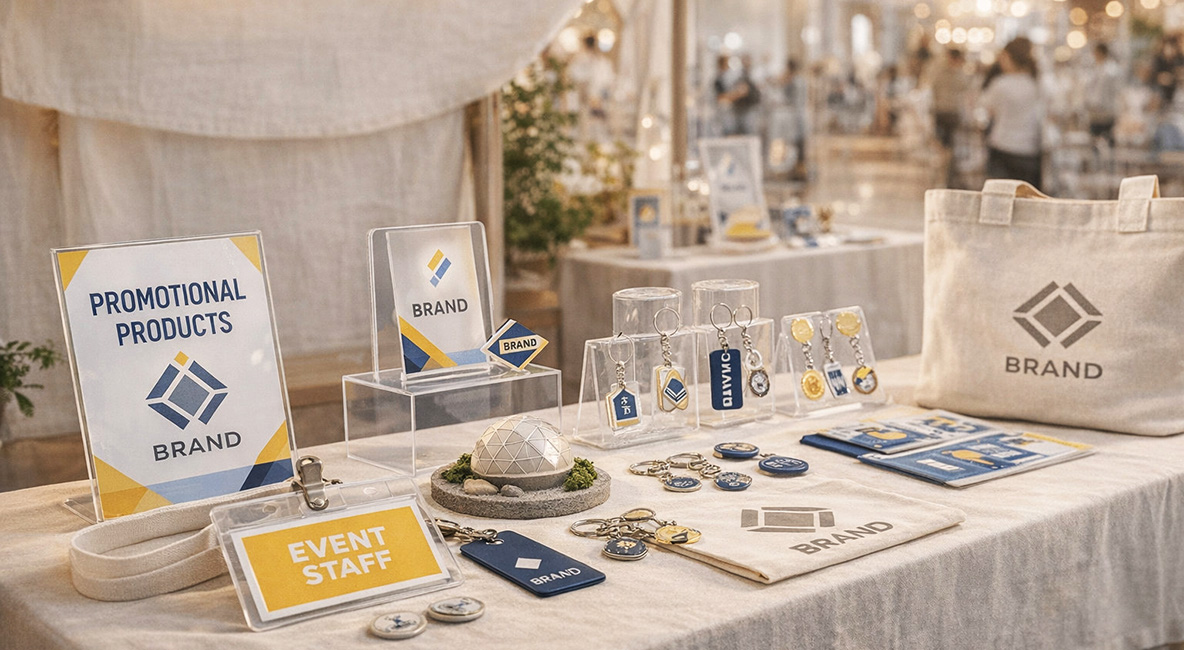
Promotional Product Ideas for Brand Events 💡
In brand events, exhibitions, pop-up stores, or marketing campaigns, promotional products are not just giveaways—they serve as a key medium to extend brand experiences and strengthen memory. Choosing the right type of product can enhance the overall quality of the event and help the brand remain memorable even after the event ends. This article outlines common types of promotional products used in brand events and provides practical planning ideas from both usage and strategic perspectives.
1. Common Types of Promotional Products in Brand Events
Across different event formats, promotional products serve varying functions and roles, but they can generally be categorized into the following types:
☝️ Entry-level giveaways
Items such as badge holders, wristbands, or small keychains, typically distributed at the beginning of the event as identifiers or basic souvenirs.
☝️ Interactive products
Products integrated with event mechanics—such as stamp rallies, challenges, or lucky draws—allowing participants to obtain items through engagement, increasing participation and dwell time.
☝️ Retail merchandise
Higher-design, collectible items such as figurines, acrylic displays, or themed products, suitable for limited-edition sales during the event.
☝️ Extended brand products
Items like tote bags, lifestyle goods, or stationery that allow the brand to remain present in daily life even after the event ends.
2. Product Planning Strategies for Different Event Scenarios
The selection of promotional products should be based on the nature and objectives of the event, rather than simply following trends.
☝️ Exhibitions / Museums
Suitable for themed and display-oriented items such as figurines, sculptural souvenirs, or character-based products that reinforce the connection between content and merchandise.
☝️ Pop-up stores / Collaboration events
Focus on limited-edition, buzz-worthy products that combine strong design with scarcity to boost purchase intent and social sharing.
☝️ Corporate events / Marketing campaigns
Practical items such as tote bags, stationery, or ID-related products that balance brand exposure with usability.
☝️ Outdoor / Large-scale events
Products should emphasize portability and durability, such as lightweight items, waterproof materials, or easy-to-store designs.
3. How to Make Promotional Products More Memorable?
Beyond product selection, how it is executed often matters more than what is made.
☝️ Integrate event themes into design
Simply placing a logo on a product often lacks memorability. Extending the event theme into product design creates a stronger connection.
☝️ Provide usage scenarios
For example, limited-edition items can function as collectibles or decorations, while daily-use items can be integrated into everyday life, making their value more tangible.
☝️ Build a tiered product structure
From free giveaways to interactive rewards and paid merchandise, creating layers enhances the overall event experience.
4. From Design to Production: Practical Considerations
In practice, promotional products involve more than creative ideas—they also require consideration of materials, manufacturing processes, cost control, and mass production feasibility.
For example:
Different materials (acrylic, PVC, poly resin) suit different forms and uses
Designs must align with manufacturing capabilities to avoid impractical concepts
Sampling and mass production require repeated quality and detail verification
In practical development, experienced suppliers can provide feasibility recommendations at the early design stage, helping brands balance creativity with real-world production while reducing communication gaps and trial-and-error costs.
Taking Kim Hwa’s development experience as an example, from design evaluation and sampling to mass production control, Kim Hwa can offer tailored production recommendations based on different requirements, helping transform ideas into stable and executable product solutions.
5. The Role of Promotional Products in Brand Strategy
The value of promotional products goes beyond immediate exposure—it lies in whether they can extend brand impressions.
Whether they are kept rather than discarded
Whether they have strong recognizability and thematic connection
Whether they reappear in daily life scenarios
When a product meets these conditions, it becomes more than just a promotional giveaway—it becomes part of brand communication.
Conclusion
Promotional products in brand events should not be treated as an add-on, but as an integral part of the overall experience design. By aligning product planning with event objectives, usage scenarios, and positioning, products can truly deliver value. Thoughtful product selection and design not only enhance event quality but also allow the brand to remain present in consumers’ lives and memories long after the event ends.
From concept development to mass production, every stage impacts the final outcome. A team with comprehensive product development experience can help transform ideas into tangible products, turning events into lasting extensions of brand value.
Customization Process: